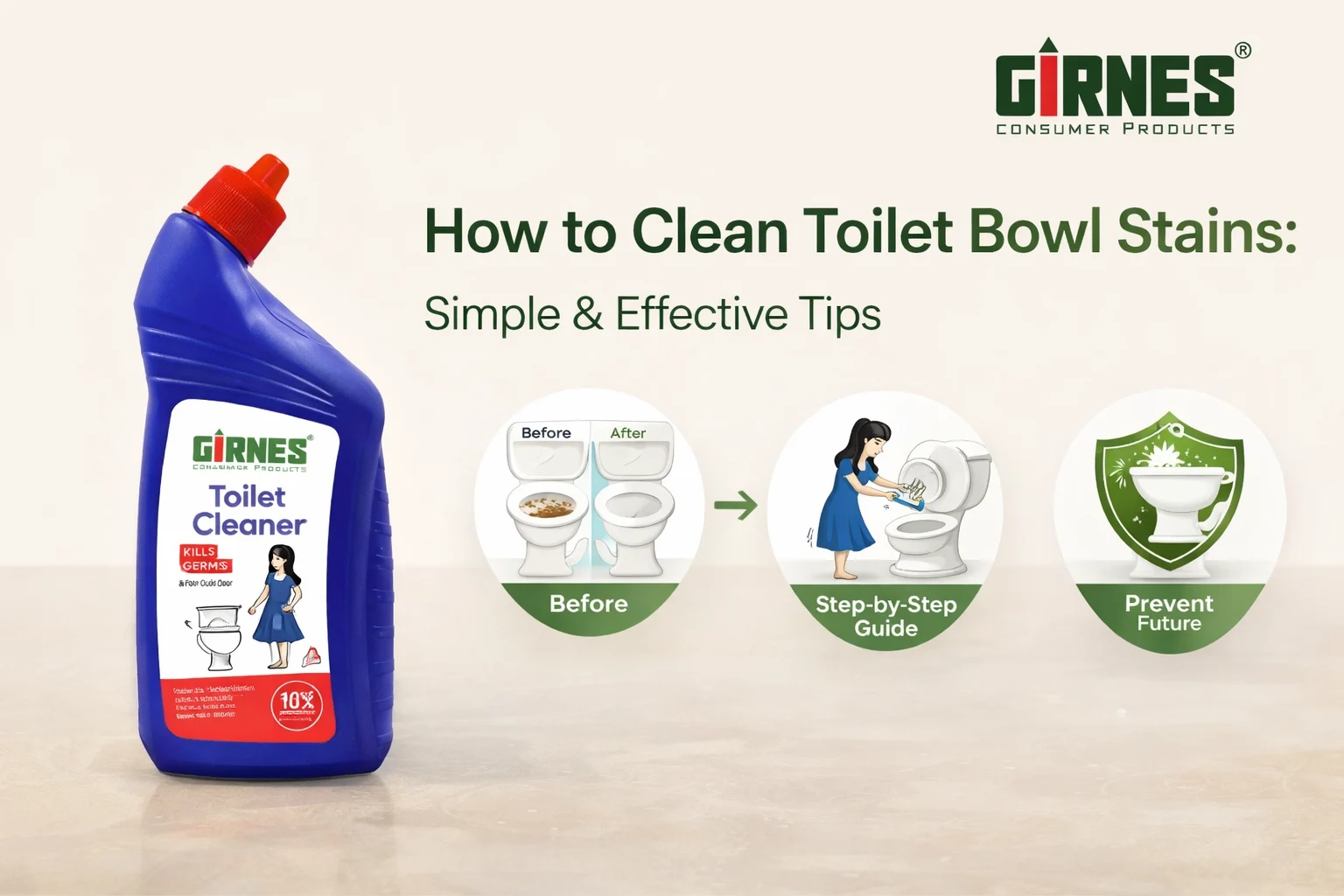
Toilet cleaning is essential not only because of the impact it has on hygiene but by turning the toilet into the most beautiful thing in the house. Its surface can get cluttered with stains over time making it look unsightly. Realizing how these stains are made and what is the most effective way to take them off is the main point for preserving the waste-free capacity of your WC. In brief, this article runs through the nature of stains that most commonly stick to the toilet bowl and also inform you of simple solutions to get rid of them.
What Causes the Toilet Bowl Stains?
The development of stains in a toilet bowl is a common problem with the causes being different and thus, using different cleaning methods. Targeting the roots can be the first step in choosing the right cleaning method.
- Hard Water: When the water evaporates, high content of calcium and magnesium tea are deposited into the water, so when the water itself disappears, mineral deposit areas appear as the last well-informed reports to discuss this topic.
- Mold and Mildew: Wet environments are generally the most vulnerable places to mold and mildew. Places like toilets, therefore, always make sure there aren’t any greenish-black spots and stains on the surface as these queasy or many other relational factors can trigger a relapse.
- Rust: In using the water, the iron deposits can make the water brown or red. This could routinely come about whether the pipelines of which it’s made are covered in iron or it’s coming from iron in the water supply.
- Organic Matter: People also create problems for themselves by not keeping the toilet bowl clean enough. Eventually, this negligence can lead to the deposition of waste and the toilet turning into a yellowish wash of waste particles that float around in the bowl. It may happen by failing to flush it regularly or using the correct amount of flush when necessary.
How to Clean Toilet Bowl Stains
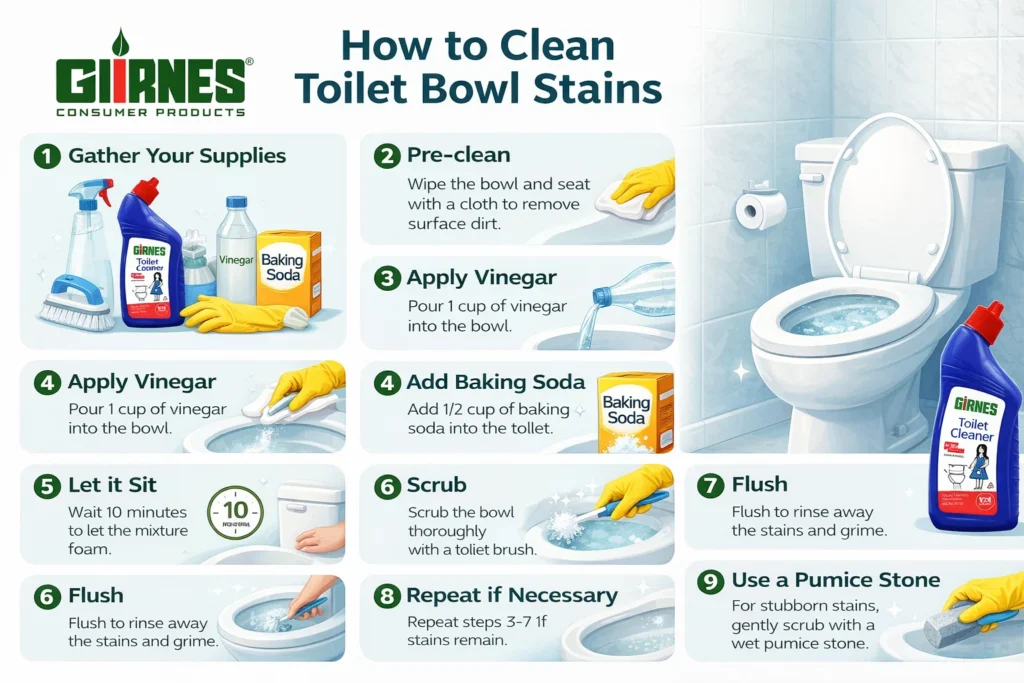
Despite the detail-oriented approach, it is a very non-complicated task to use some cleaning products in removing such a brainchild stain in the toilet. The instant it is nevertheless, the notorious pileus with its tooth-like edges in the clouds dispels the tristeous atmosphere, the blue of the sky becoming joyful in the vast expanse seen only when the weather is so clear that it allows one to see the farthest.
- Gather Your Supplies: A good cleaning process usually includes the aid of a toilet brush, rubber gloves, a spray bottle of white vinegar, baking soda, a pumice stone as one of the optional materials if it is available. Choosing products from a trusted Toilet Cleaner Manufacturer ensures effective stain removal and long-lasting hygiene.
- Pre-clean: First, rinse the toilet to dampen the surface. Thus, the surface debris will be detached and cleaning will get more efficient.
- Apply Vinegar: The application of white vinegar is done by the process of spraying targetedly at the inside of the toilet walls. By releasing the hydrogen part of the WHX2, the Vineteo Acid which results from that can act the quickest because it can clean up the cleaning strains and provides a green environment.
- Add Baking Soda: Before applying vinegar, add a generous amount of baking soda inside the Bowl. The combination of vinegar and baking soda creates a foaming reaction that enhances cleaning power.
- Let it Sit: 20 minutes of time is subscribed for the cleaning agents to work on breaking down the stains–then you will be able to start the cleaning part of the procedure with the help of the training obtained by reading some problem-solving books on the subject with that meditation.
- Scrub: Wearing rubber gloves, clean the stains by repeatedly brushing them. The foaming process is a simulator on one level, while enabling microorganism evolution on the other.
- Flush: The toilet should be flushed and the residues cleaned off to where there aren’t any noticeable stains remaining. And now you are ready to blot that spot by repeating this spot and adding the opposite orangeness side thereby making a water droplet maze on your paper.
- Repeat if Necessary: If it’s really hard getting it out, then just like with some other billetti do these things again: Repeat the cleaning, rust, or hard water stains might need two treatments.
- Use a Pumice Stone: Shift the brush to a particular area of the toilet that is still discolored to rub the stain off with the help of a pumice stone. A pilot area will give you an idea if it is too aggressive or just the right one.
Toilet Bowl Cleaning Tips

The continuous practice of cleaning is what is required during the day, and as a monthly cleaning routine will be more helpful in the end. Bear in mind that this reduces the effort needed for deeper cleans and keeps stains from setting in.
- Regular Maintenance: Regular maintenance can be considered as the most significant part of the task of keeping toilet bowls clean and hygienic. Cleaning the bowl at least three times a week shortly after use is how it is done. This keeps stains and bacteria from building up. Use a toilet brush and a mild cleaning solution to scrub the bowl, making special attention to the area under the rim and around the waterline. Regular check-ups will help us get rid of even the most stubborn black stains and make each cleaning more flexible.
- Water Softener Systems: Water softeners can reduce the minerals that most often lead to the difficult toilet bowl stains. Water evaporating from the toilet bowl usually results in lime scale, a common household scourge that can spoil the appearance of bathroom fixtures. By softening the water will not allow these deposits and therefore will extend the hygienic period of the toilet.
- Ventilation: Good ventilation is very important when it comes to keeping the toilet clean and preventing the accumulation of moisture. Airflow is actually another way to decrease humidity in the room thus making such moisture-induced problems as mold, and mildew go away, and also ensuring the toilet is not ruined naturally over time by the discolored stains. Employ the exhaust fans in your bathroom or if weather conditions allow, just keep the windows open to increase the airflow thus keeping the area well ventilated, dryer, and the air cleaner.
- Natural Cleaners: People often prefer to be environmentally friendly in the way they clean their home in which natural cleaners are an excellent choice to them. Ordinary household ingredients such as baking soda, vinegar, and lemon juice are very effective in cleaning toilet bowls. By divorcing chemical products, baking soda plays a role as an abrasive cleaner, vinegar is a magic plant to disinfect and remove stains, and lemon juice increases the strong and sweet fragrance. These eco-friendly products can now be used instead of those which are packed with chemicals while still achieving a toilet that is very clean and shiny.
- Professional Products: When faced with such an issue as pet odors, mold, and mildew resulting from frequent work cleaning agents come to be extremely worthy. These are the products that you use when you need to remove stains, get rid of germs, and the toilet needs to be with a nice smell again. It is really important to implement the labeling information for cleaning and treatment too to make the situation safe and these products used along with maintenance will solve the problem.
Choosing the right home care products manufacturer helps deliver superior cleaning results every time.
The simple way to keep your toilet clean is to clean it regularly. With simple cleaning methods and the appropriate products, you can easily remove stains and keep your toilet fresh and hygienic. Regular cleaning also stops dirt from building up and helps your bathroom look clean and well-kept.
FAQs :-
1. How often should I clean the toilet bowl to prevent stains?
To prevent stains and keep the toilet free of harmful bacteria, it is highly recommended to clean the toilet bowl at least one time in one week. In addition to regularly wiping down the toilets with a disinfectant cleaner that is reported to be effective at removing deposits, it is most important to keep toileting spaces clean and bacteria count low. Nevertheless, they’re more necessary for families with more than one occupant/visitors or homes with increased activity, are cleaners, more often to ensure the better rest of cleanliness.
2. How do I stop hard water stains in the toilet bowl?
To avoid hard water stains in the toilet bowl, you should always utilize a toilet cleaner developed specifically for mineral accretion. Moreover, if it is within your budget, you should install a water softener to decrease the calcium and magnesium content in your water, and hence, to eradicate the formation of water stains in your bathroom over time.
3. Can I prevent toilet bowl stains completely?
While prevention of toilet bowl stains may not be wholly possible, persistent cleaning with a good cleaner is indeed a great way to reduce them. Moreover, the use of toilet bowl-cleaning tablets can aid the clean look to stay longer, with the result that a proper toilet bowl looks of the same color as it is clean again. Continuous flushing and correct air exchange are other practices that help in keeping stain formation at bay.
4. How can I keep my toilet smelling fresh between cleanings?
If you want to keep your toilet fresh between cleanings, you can use things like toilet freshener tablets or place a little bowl of baking soda in the bathroom to absorb the odors. Moreover, providing a good ventilation system means to run a bathroom fan or open the window whenever it is possible to do so.
Related Posts :-
(1): How to Clean Bathroom Tiles
(2): Floor Cleaning Liquid Guide