
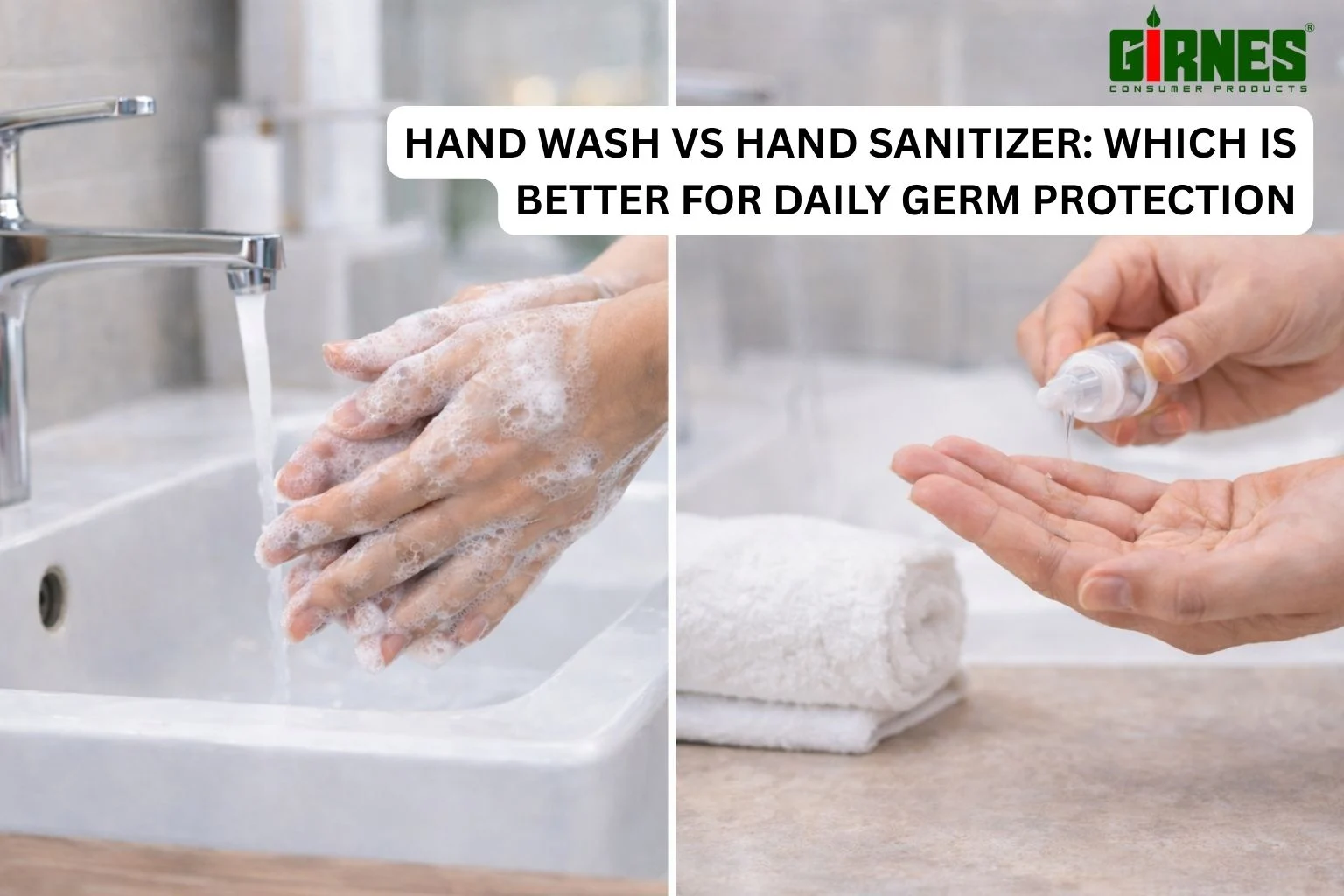
In the modern world where people are more health-conscious than ever, the cleanliness of our hands has become a must-do habit every day. Hand hygiene should be mandatory in the prevention of diseases, no matter if it is done before eating, after touching surfaces, or while travelling. Yet, the question of which is better for daily germ protection still confuses numerous individuals—Is it hand wash or hand sanitizer? Both means are good, but one should use them according to the circumstance. We will learn their differences using simple and straightforward terms.
1. How Hand Wash Works
Hand washing is a process that involves the use of soap and water to physically remove bacteria, dirt, fat, and other pollutants from the hands. When you apply soap to your hands, it interacts with the oils and the fatty layers of the bacteria, thus helping to separate them so that they can be easily removed with water. In addition to killing harmful bacteria and viruses, it also purifies the skin surface thoroughly.
Hand washing is additionally potent after:
- Using the toilet
- Cooking or handling raw food
- Handling pets, soil, or dirty things
- Coming back from outdoor
With this method, you get rid of the dirt that you can see as well as the germs that you cannot see.
2. How Hand Sanitizer Works
Hand sanitizer is a water-less disinfecting solution that is effective in killing germs immediately. The majority of sanitizers have 60–80% of alcohol or other germ-inactivating substances that are bacterium, fungi, or virus-killing agents on the cleaned hands. They do not directly remove dirt or grease, however, they are excellent for a quick disinfecting.
Hand sanitizer is the most effective use when:
- There is no water and soap
- You are out, in a car, hospital, office, school, or shopping
- After touching the surfaces that are used by the public like door handles, currency, elevator buttons, and ATMs
It provides fast protection but can only be effective on clean hands.
3. When Hand Wash Is More Effective
Using hand wash is a more suitable option in a situation when your hands are visibly dirty, oily, or sticky. By the use of soap and water, you can remove dust, chemicals, allergens, and food particles that a sanitizer cannot remove. It fits perfectly well in hygiene at home, food preparation, childcare, and after any kind of outdoor activities. Besides that, hand washing is also a safer option for kids and people with sensitive skin since most moisturizing hand washes are gentle and skin-friendly.
4. When Hand Sanitizer Is More Useful
Hand sanitizer is a good option for times when you are out of the house and there is no water available. That’s why it is also very popular in hospitals, offices, public places, shopping malls, and cars. Just a quick application, a short rubbing, and your hands are cleaned. It is quick, convenient for traveling, and excellent for people with busy lives or those who spend a lot of time outdoors.
On the other hand, in case your hands are greasy or dirty, do not use a sanitizer as it is incapable of cleaning the actual dirt or any harmful particles.
5. Benefits of Hand Wash for Daily Use
Hand wash is the best way to kill germs and it also helps in removing dirt and chemical residues from the hands. Today’s hand washes have skin conditioners, moisturizers, and essential oils added to them which not only nourish the skin but also prevent it from drying and impart a nice fragrance. To keep their hands safer, a lot of families and offices have now opted for products from the Handwash Anti Bacterial Manufacturer in Surat, which is a reputed source of hygienic and skin-friendly solutions.
6. Benefits of Hand Sanitizer for Daily Use
With hand sanitizer, a job can be done very quickly and a person can be very conveniently. It is a free of all these things commodity; no water, no towel, and no sink is needed. Definitely, you can use it wherever you want – in a car, on a train, at a meeting, or even before touching food packets. It is equipped with a very fast germ protection mechanism of minutes. In a sense, it is very good for people in public-facing roles such as doctors, teachers, travelers, and office professionals.
Nevertheless, an overabundance of alcohol-based sanitizers may result in some skin types becoming dry, irritated, or itching. Therefore, it is imperative to use skin-friendly sanitizers.
7. Which One Is Better for Home and Office Use?
Hand wash remains the most popular option at home as it penetrates fully into the dirt—removing grime, sweat, and bacteria along with the general dirt.
However, in offices or public places where one can come in contact with multiple surfaces quite frequently, the need for hand sanitizers becomes inevitable as they provide quick disinfection.
As a result, the best thing would be to have both means of hygiene at your disposal—perform hand washing when you have access to water and apply sanitizer when you are outside or cannot spare time.
Moreover, hygienic conditions both at home and office cannot be said to be there if the floors and other surfaces are not clean, which can be achieved by using products from a reputed Floor Cleaner Manufacturer in Surat.
8. Which Is Safer for Children and Sensitive Skin?
Children’s skin is more sensitive, and sanitizers that contain alcohol, if used very often, may cause their skin to dry out. A foaming or moisturizing hand wash is better for them. If the handwash used is of a mild pH-balanced nature, then it not only acts as a safe barrier against germs but also keeps the skin in a supple and healthy condition.
Moreover, in the case of adults, the skin of the hands is generally less likely to be damaged when washing is carried out frequently and in a manner that is gentle.
9. Expert Recommendation
Health experts like the World Health Organization (WHO) and CDC consider washing hands the most effective way of a thorough cleaning. Usage of hand sanitizer is advised by them only in the cases where soap and water cannot be found. Essentially, washing hands cleans, and using hand sanitizer disinfects. Both are necessary, but they cannot be used as substitutes.
Using a hand sanitizer and washing your hands are both necessary for a good hand hygiene and a daily protection against germs. Washing is the most effective way to physically remove dirt, oil, and bacteria from the skin, whereas a sanitizer is the best way for a quick disinfection when you are on the go or without access to water. If you are using both in the right way according to your place and what you are doing, then you will be the least vulnerable to germs.
FAQS
What Are The Main Differences Between Hand Wash And Hand Sanitizer?
Hand washing cleans by removing dirt and germs with soap and water, while hand sanitizer disinfects using alcohol or antibacterial ingredients. Hand washing is ideal at home or after meals; sanitizer is best for quick cleaning when water isn’t available.
Is Hand Wash Safer For Children And Sensitive Skin?
Hand washing is generally safer for children and people with sensitive skin, especially if it’s moisturizing or pH-balanced. Choose a gentle antibacterial hand wash for daily use to keep skin soft while maintaining hygiene.
What Is The Correct Way To Wash Your Hands For Maximum Germ Protection?
Wet your hands with clean water, apply hand wash liquid, and lather for at least 20 seconds—rubbing palms, fingers, and nails. Rinse well and dry with a clean towel. This routine helps remove 99 % of dirt and germs, keeping hands truly hygienic.